
Author Archives: Daryl Densford

“Chaplain, I Will Die Like a True and Loyal Soldier”

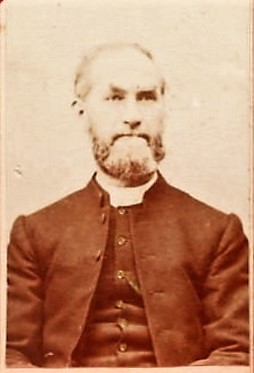
Chaplain Jacob Eaton

Chaplain Jacob Eaton, 7th Connecticut Volunteers

“After crossing the James, we ascended to the elevated plane which lies between this river and the Appomattox. This brought us upon the old familiar ground where we were encamped and fought last summer. The soldiers of the gallant 7th will long remember the “Bermuda Hundred Sin”. Here are sad reminders of our bloody struggles. Again I stood beside the graves of those noble men and valiant soldiers, Sergeants Nichols and Edwards. I was reminded of the last hours and last words of the kind-hearted heroic Edwards. I recalled and relived the bright but bloody morning when I entered the old log house, where he lay in one corned on a rude bunk, sinking slowly and surely into a soldier’s grave. He had only three months longer to serve. With bright hopes and fond anticipations he looked forward to the day when he would return to his happy home in New Haven-to his beloved wife and noble boy. And how anxiously the loved ones awaited his return. How many little things they did, how many preparations they made in view of the joyous meeting. He had been spared during nearly three long years of exposure, hardship and battle. Could he be taken now from all he loved on earth, from the  wife and child who had so often prayed, so much longed for his safe return? Yes, for God’s ways are not always our ways. He does not afflict willingly, nor malignantly, but wisely, tenderly, for our profit. The sergeant did not expect to die when I entered the room where he lay. He was wounded the night before, and Dr. H. pronounced his wound “superficial” -not dangerous, not fatal. But the seal of death was stamped on his manly face. He had nearly reached the outer limit of life when I called.

“Wiping away the tears and repressing my emotion, I said calmly, “Sergeant, it is my painful duty to tell you that you are mortally wounded and must soon die.” His look of anxiety and disappointment I will not attempt to describe. “You will not let me die before I once more see my dear wife and beloved child! Oh, I cannot be denied this privilege, this blessing, “said the heroic sufferer. This cannot be, I replied, and as your spiritual friend and teacher I advise you to leave whatever messages you have for your wife and child, and make whatever arrangements you think necessary concerning your worldly interests. Then he was calm. He lift messages tender and expressive for those who were waiting his return. He gave directions for the disposal of his effects, and for the education of his little son. Then looking into my face, he said, with a calm, firm manly voice, “Chaplain, I will die like a true and loyal soldier.” I am glad to hear you speak thus, I said; but, sergeant, are you prepared to die like a true Christian? “I have thought much on that subject of late, Chaplain, and I do want to cast myself in humble, heart felt penitence upon the atoning merits and infinite mercy of Christ.” I prayed with him. He became calm, hopeful, happy in that Holy One, who, in the fullness and freeness of his love, forgave the dying penitent on the cross. Soon after came the death struggle, and the brave sergeant, the kind husband, the loving father died in my arms. Then we laid him to rest in the burial ground, where sleep many of is brave comrades. Oh, Virginia, your soil will be held as sacred in all time to come, for the hero and patriot dead who rest in thy bosom.”

.

.

.

From “A Chaplain’s Notes from TEF 24th Corps. Camp 7th Regiment, Conn. Vols., Dec. 24, 1864” which appeared in The Hartford Evening Press, 28 December 1864 (author’s collection).

The rest of the article written by Chaplain Eaton can be found at “A Chaplain’s Notes.”

Photo from WorthPoint.com

.

.

.

The Sin of Patriotism?

Most military members who I come across are patriotic, as are many people of faith. The chaplain usually embodies both of these. The below article is interesting because it addresses some of the complaints of patriotism while also being faithful to one’s religion.

.

The Sin of Patriotism?1

american-and-christian-flags1It’s the 4th of July, Independence Day for the United States of America. Here in Korea (where I currently live), you wouldn’t know it from any other day (unless, of course, you’re on a U.S. military installation). But with the benefit of the Internet, there’s no escaping it…though personally I wouldn’t want to. I celebrate with millions of other Americans our hard-won independence from Great Britain 240 years ago.

Much of what I’m seeing in my Facebook feed, however, is not a positive response to it being the 4th of July. I’m not judging, but from where I sit, many of those posters seem to be speaking from their holier-than-thou ivory towers to us lowly patriotic souls who are in need of their superior spiritual insight and understanding of the mind of God. Let me explain:

First, they condemn our fight for independence as contrary to the scriptural mandate to be obedient to the powers in place over us as being instituted by God. They view the situation on the American continent of the 18th century through 21st century glasses, presuming to understand the situation our political forefathers and mothers experienced better than those who were living it.

Continue reading original…

.

.

.

Originally published 3 July 2016 at Here I Sit

.

.

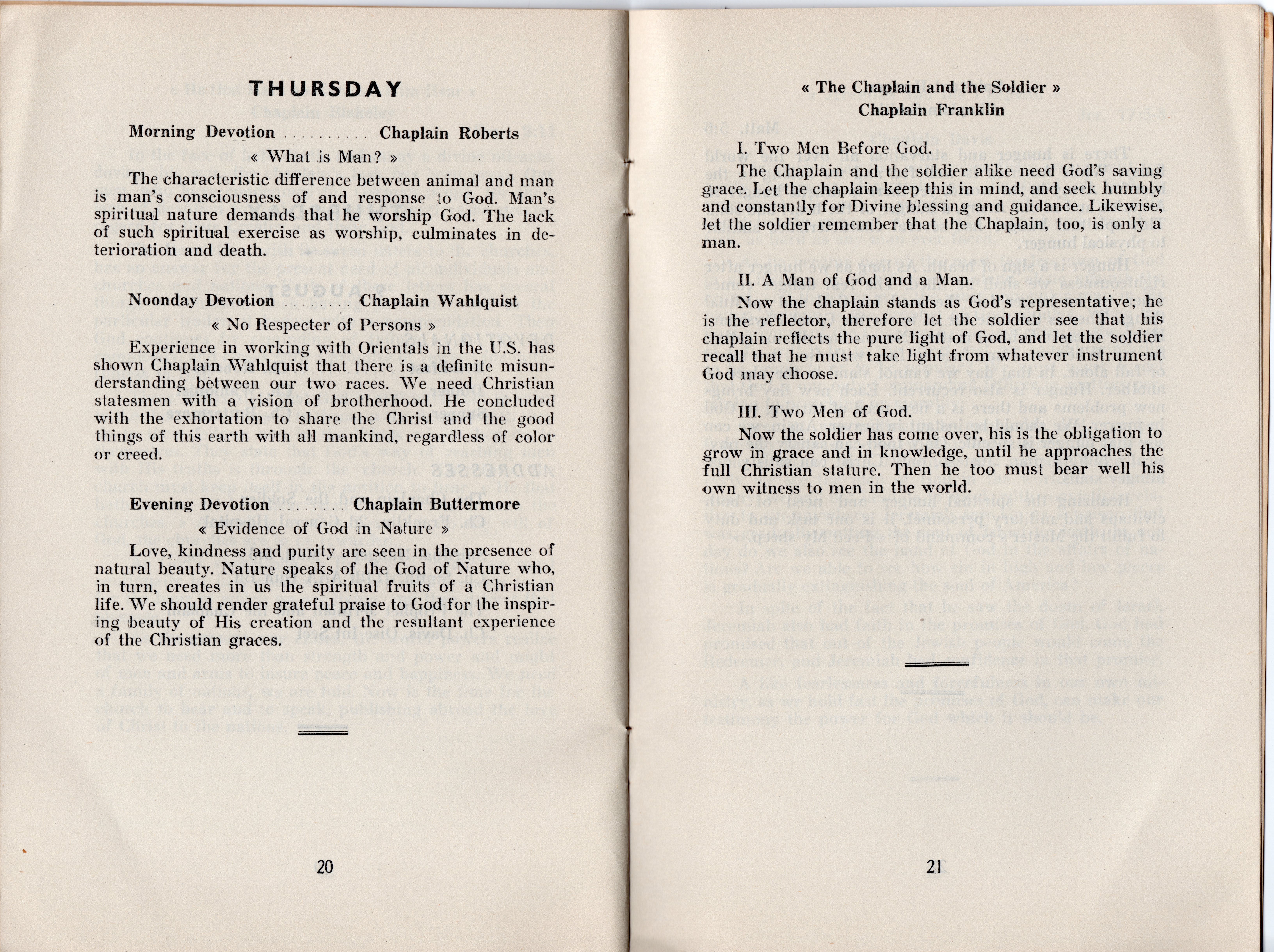
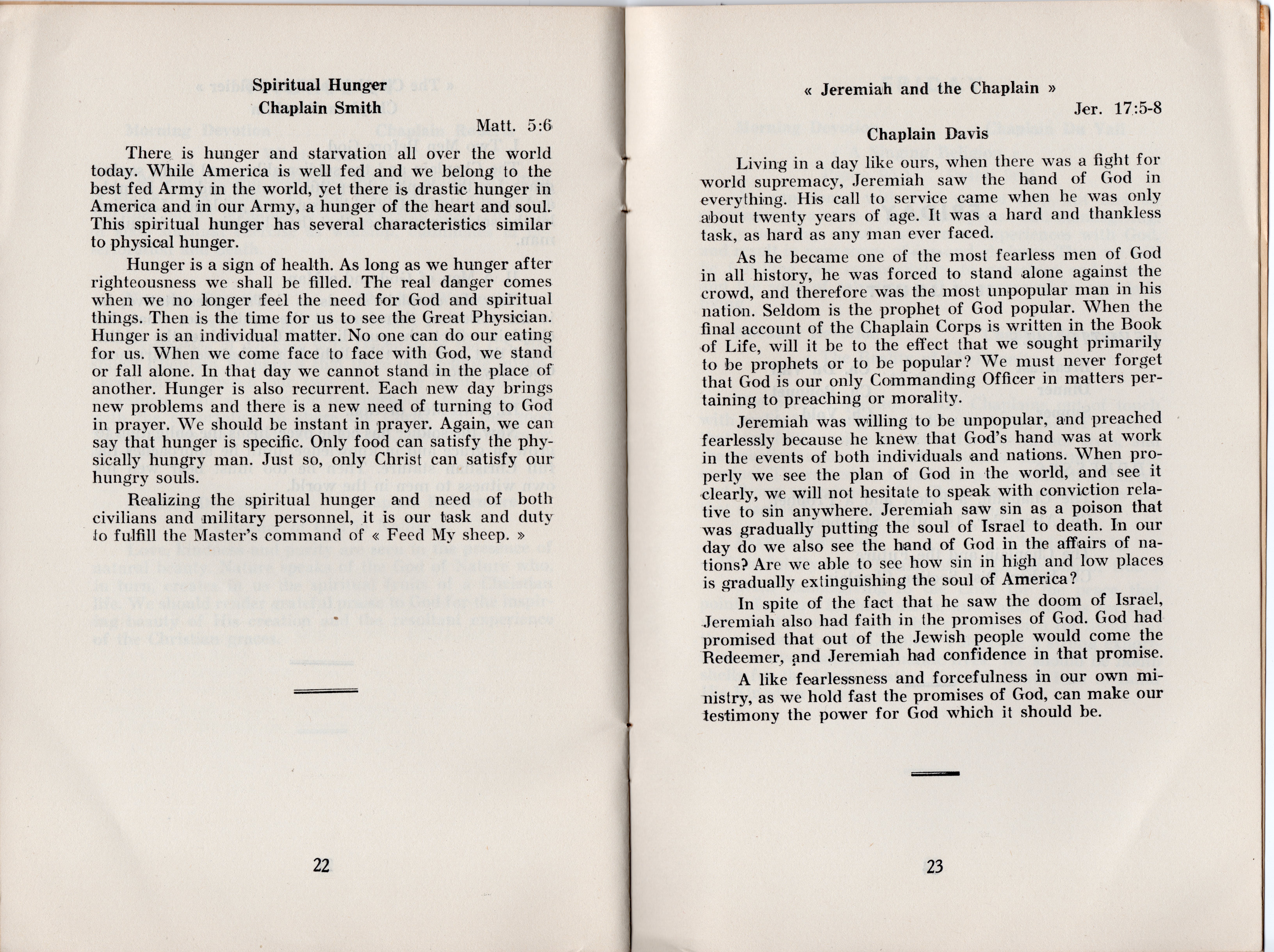
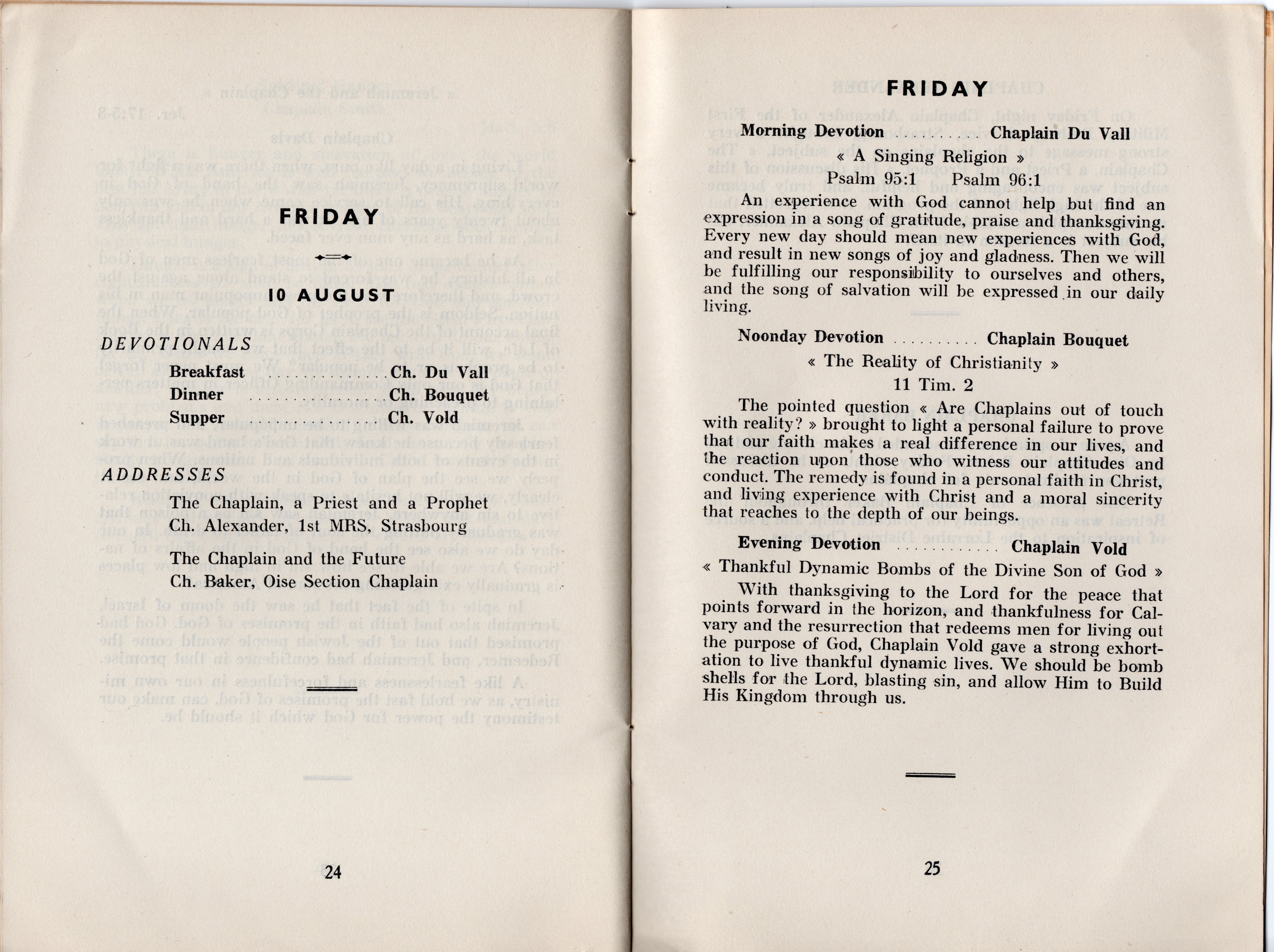
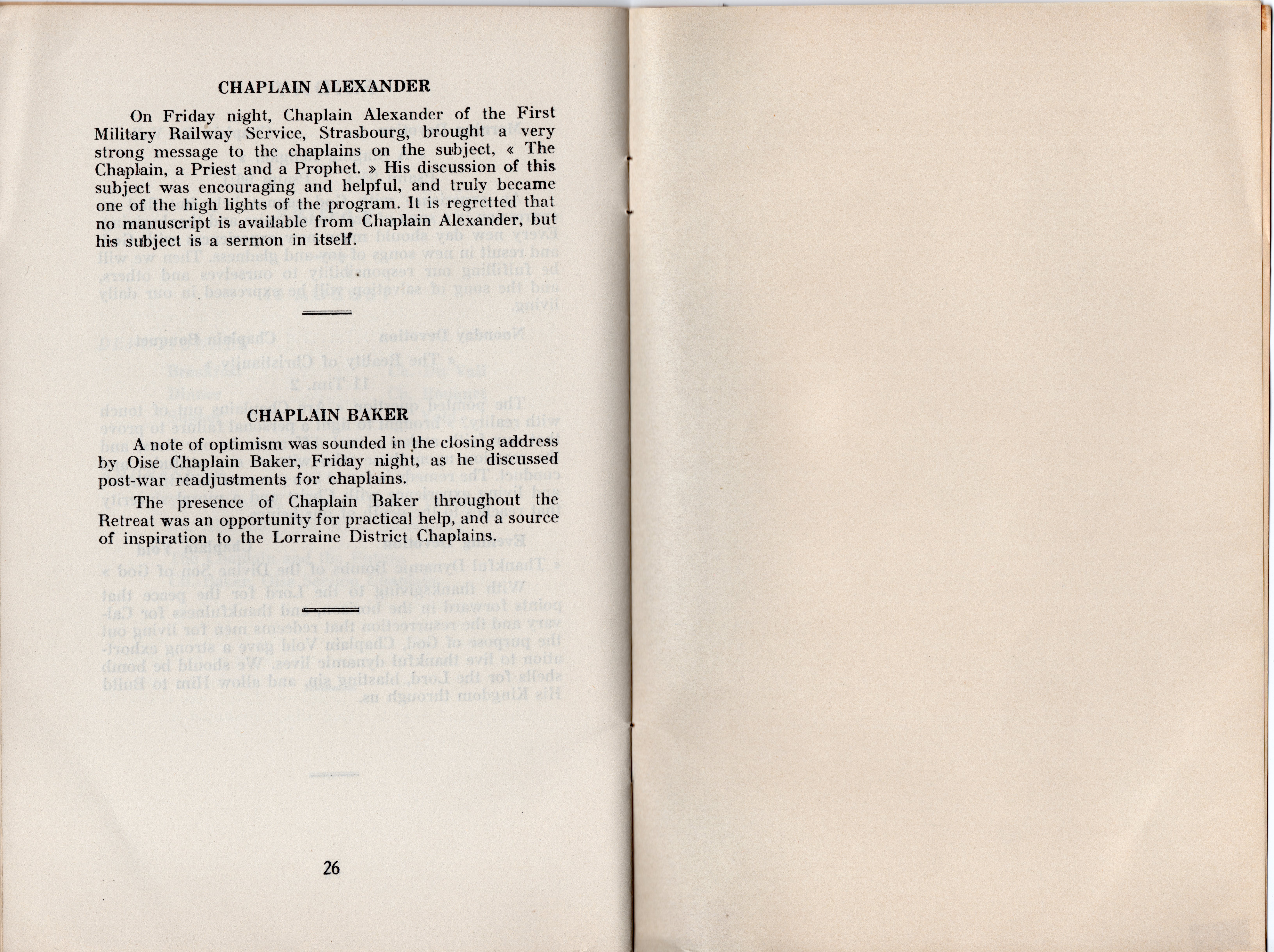
World War 2 Protestant Chaplains’ Retreat

Protestant Chaplains’ Retreat, Lorraine District, Jougne France, 6-10 August 1945

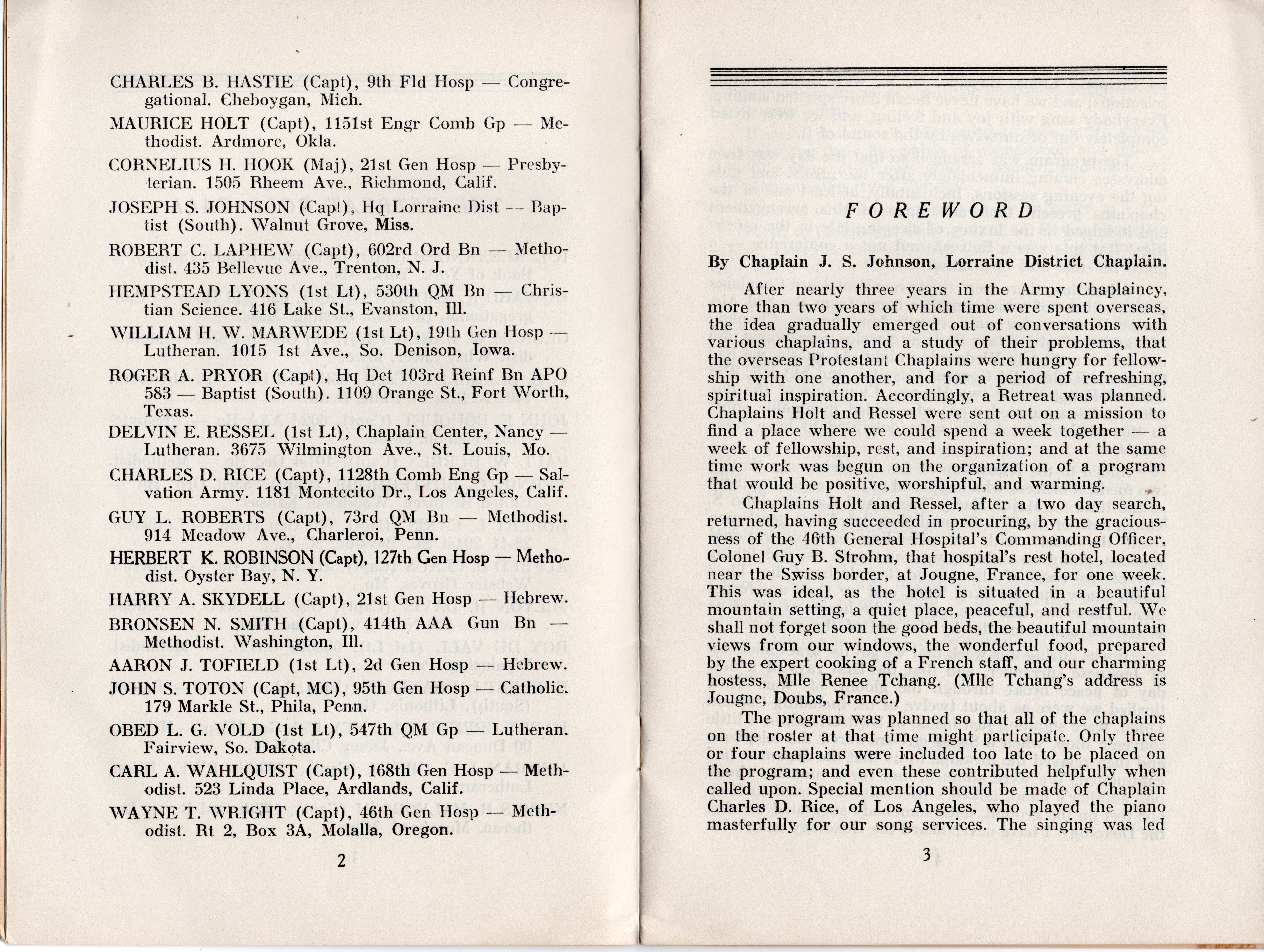
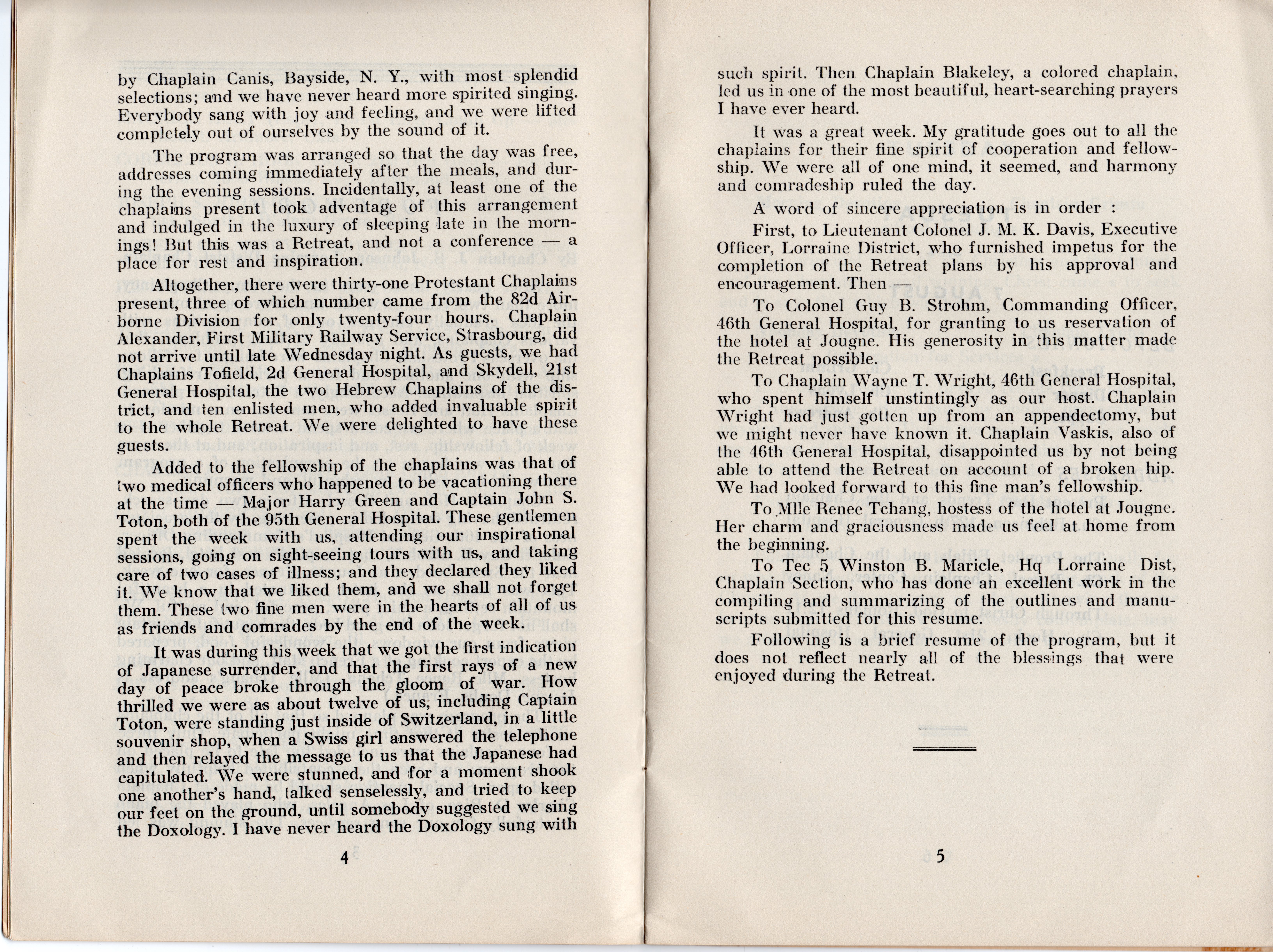
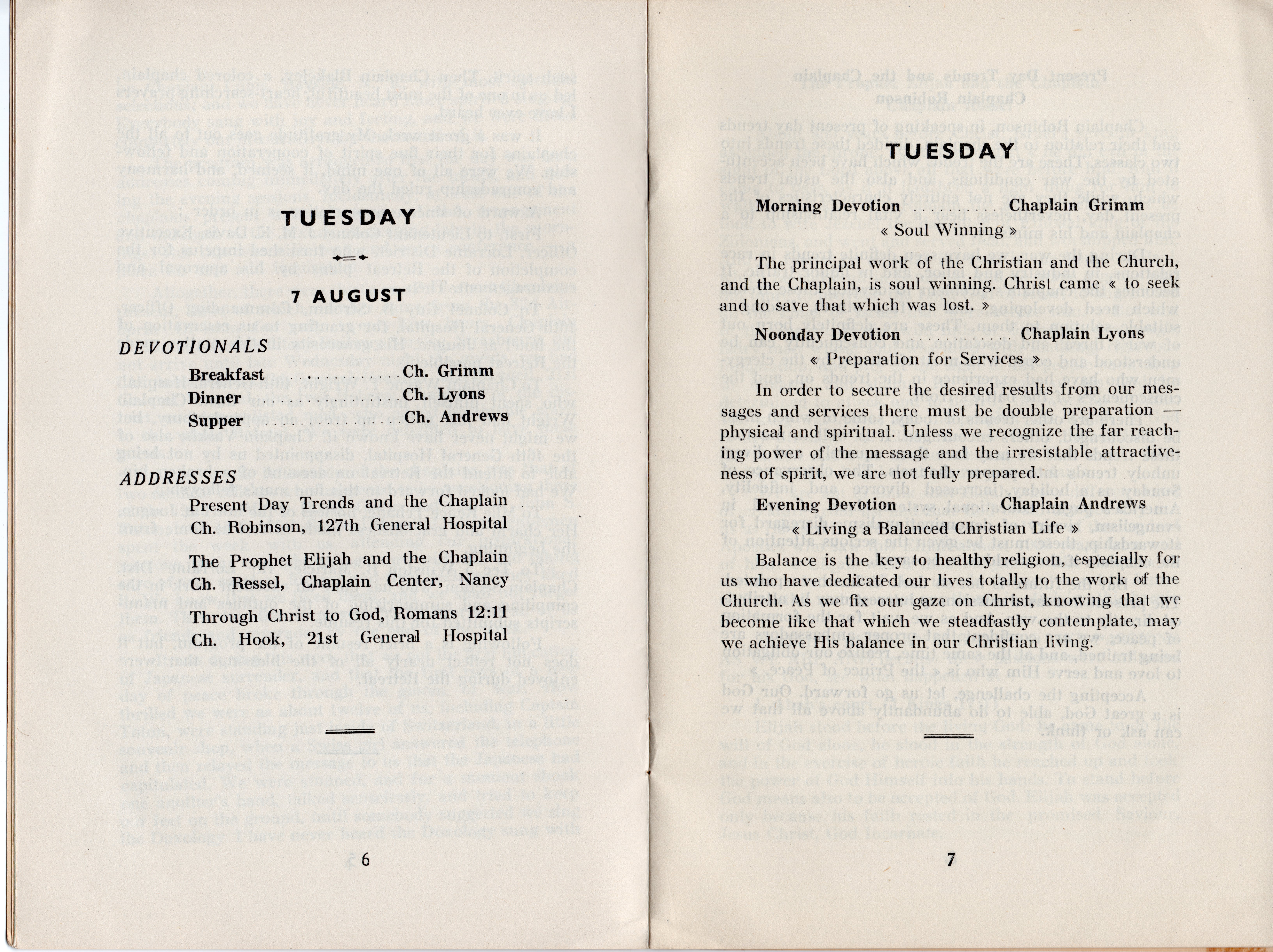
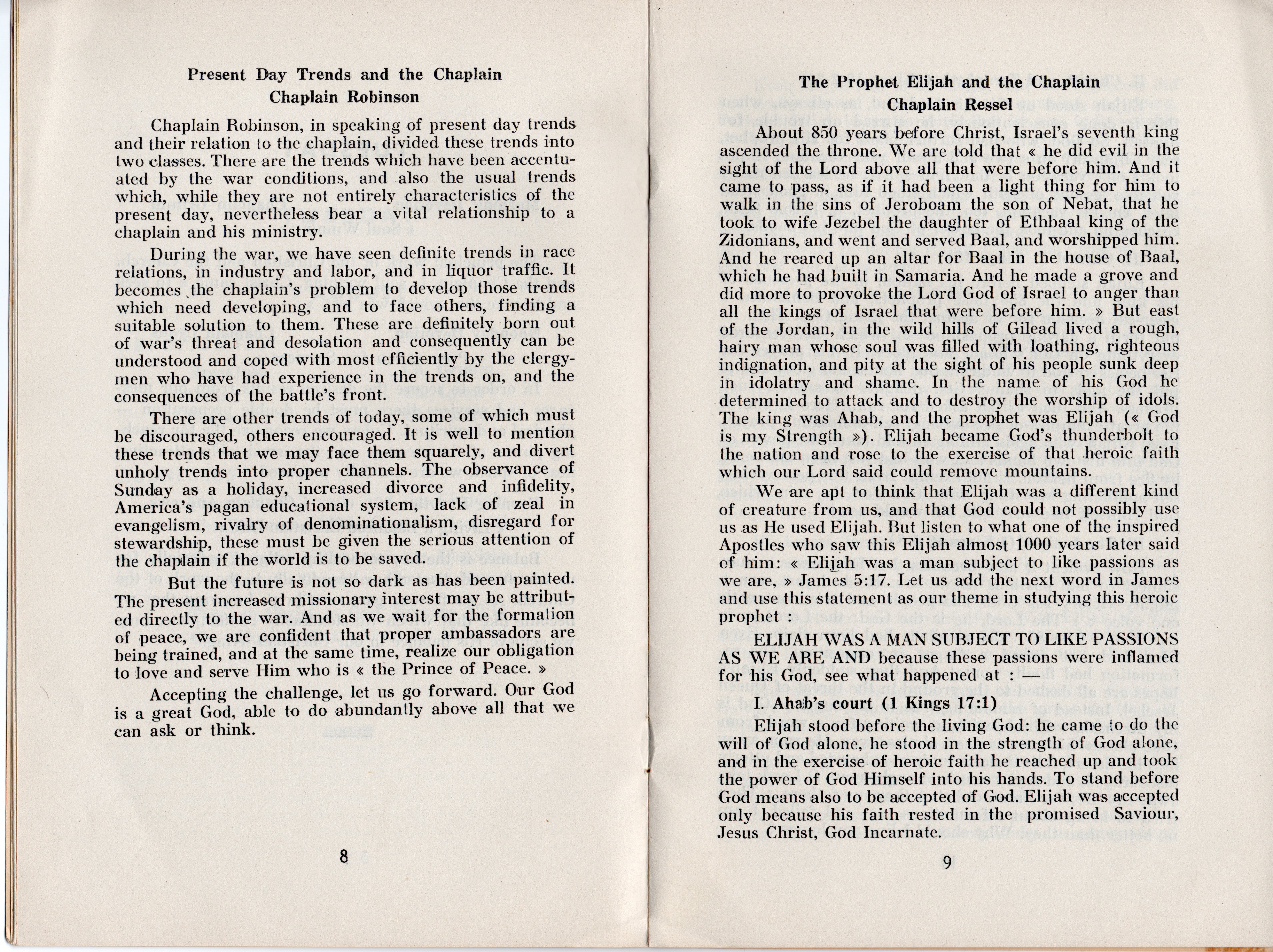
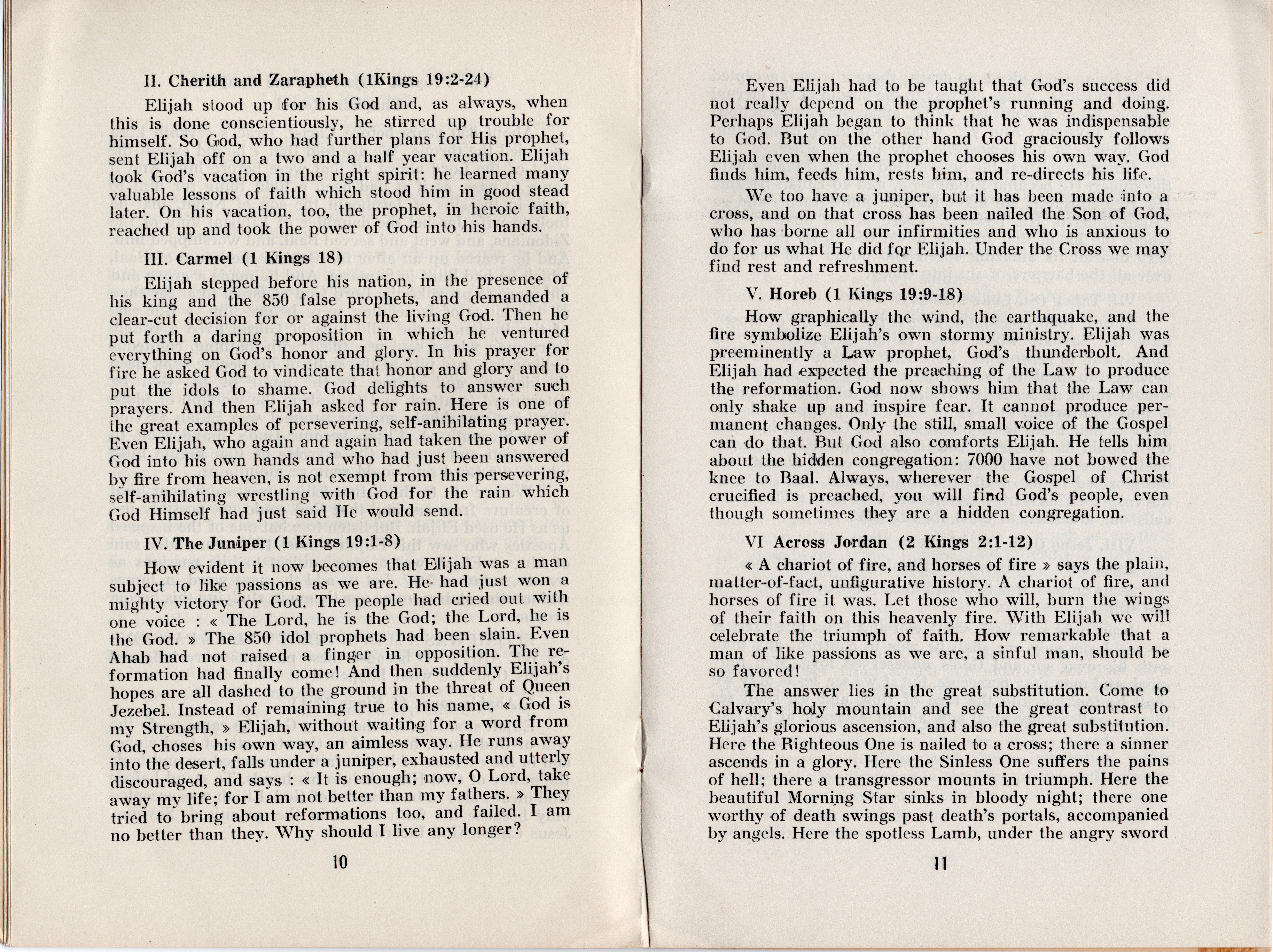
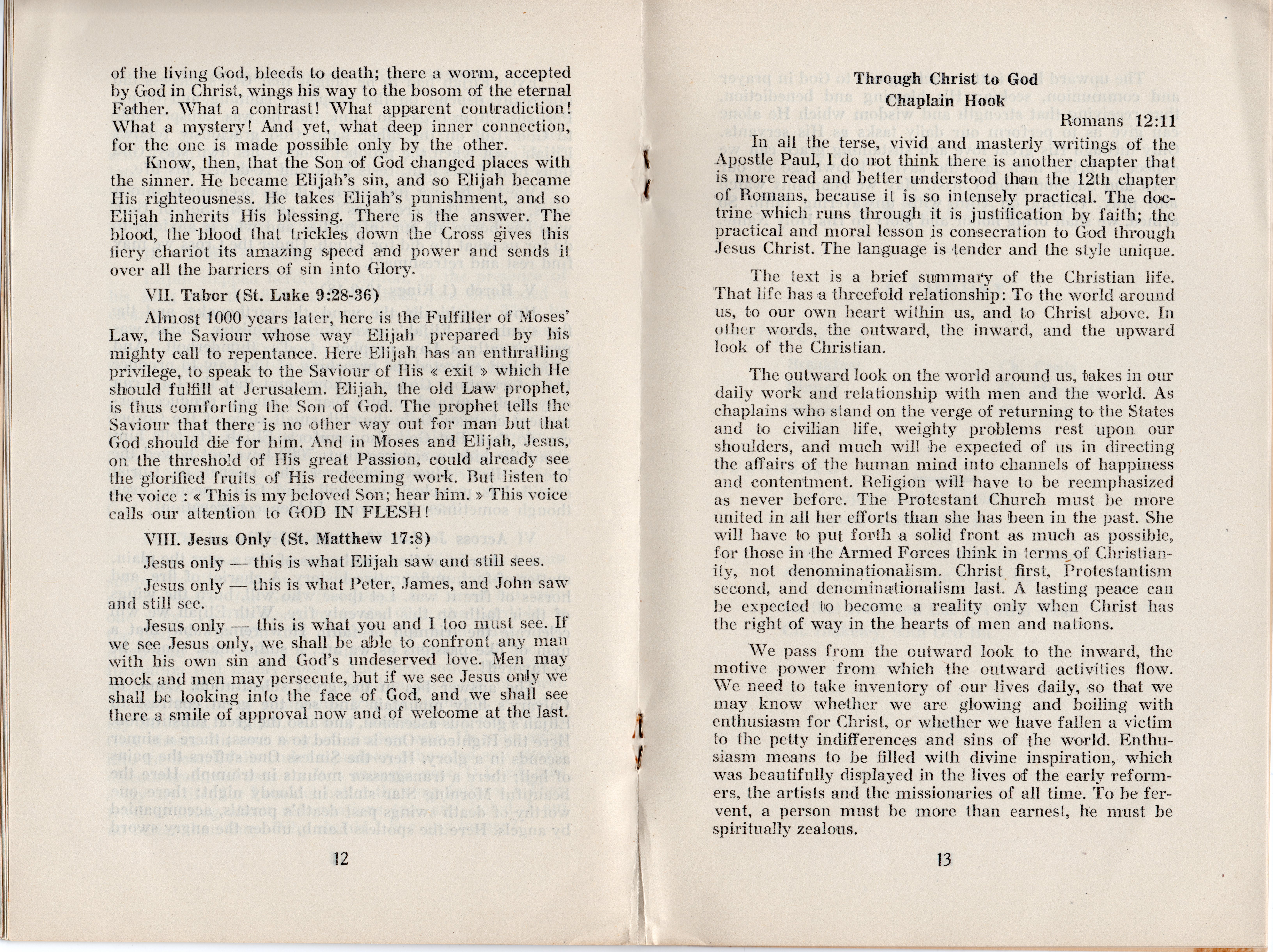
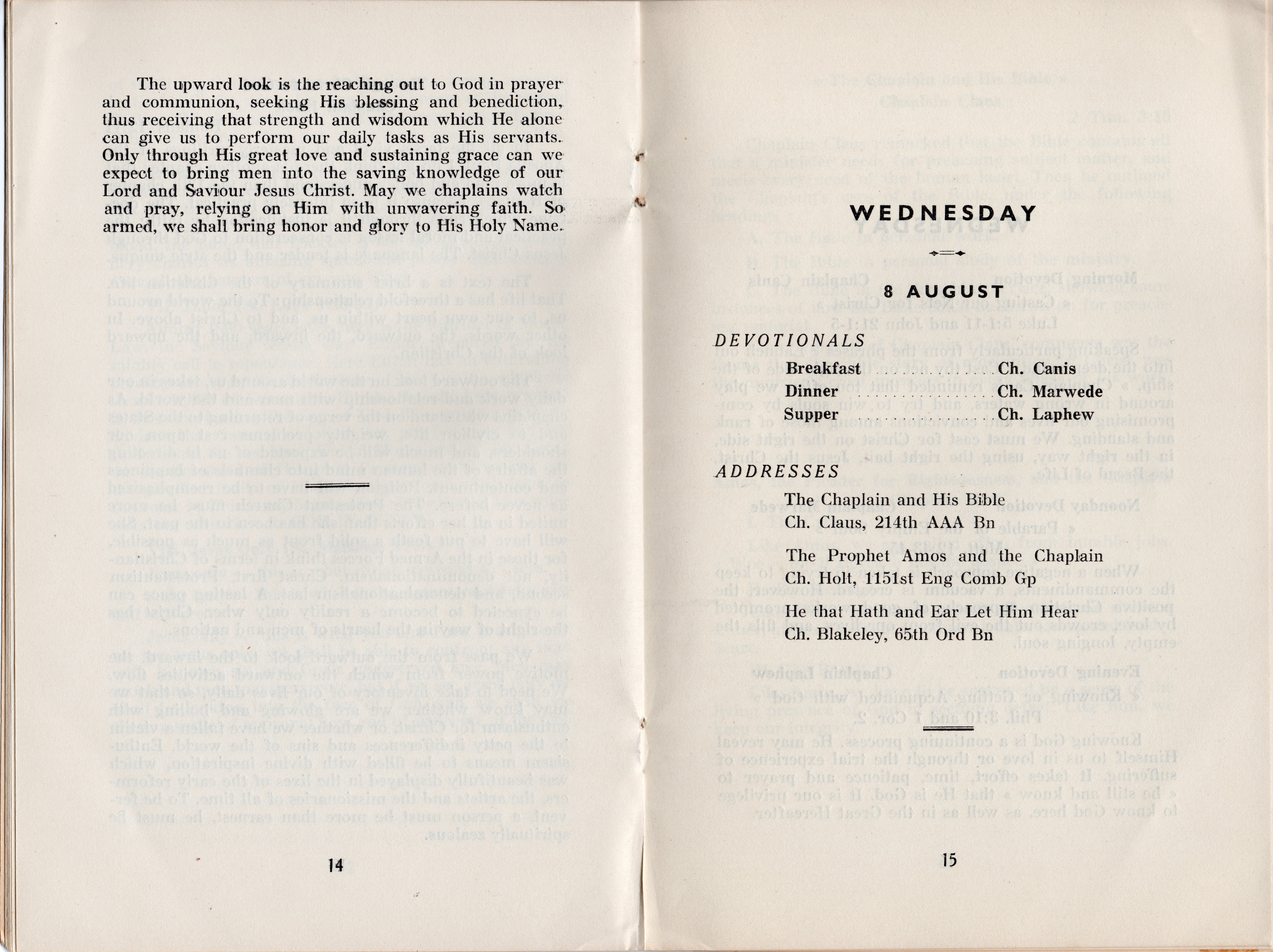
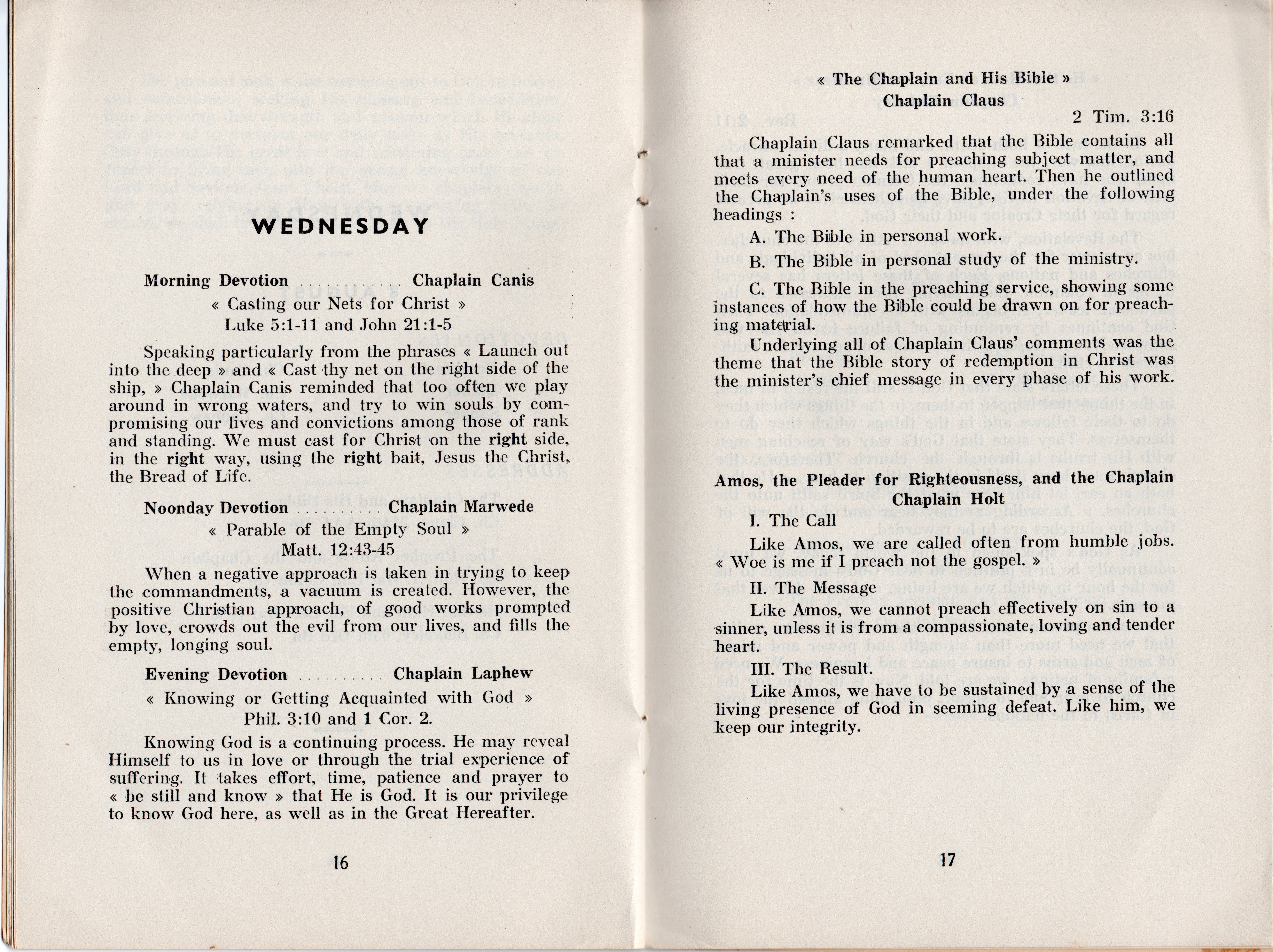
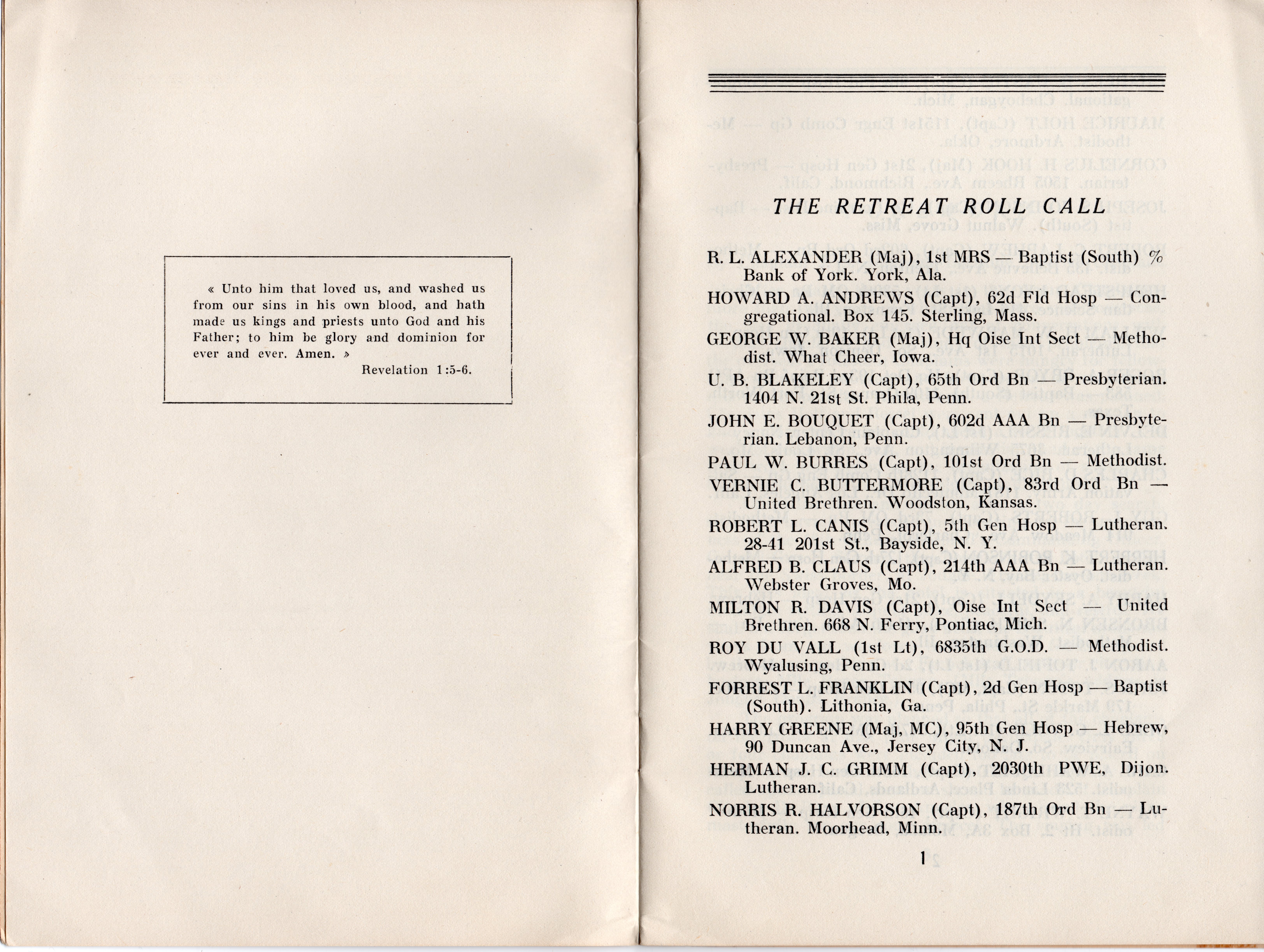
Following the end of the war in Europe, just as word was coming in about the Japanese surrender, Protestant Chaplains from the Lorraine District in France met for a time of fellowship, rest and relaxation, at the 46th General Hospital’s Retreat Center in Jougne, France on the Swiss border. Below is the booklet that was published following the retreat which has some of the remarks and devotionals given during the the chaplain’s time together.

Some interesting titles of the addresses are: Present Day Trends and the Chaplain; The Prophet Elijah and the Chaplain; Through Christ to God, Romans 12:11; The Chaplain and His Bible; The Prophet Amos and the Chaplain; He that Hath an Ear Let Him Hear; The Chaplain and the Soldier; Spiritual Hunger-Matthew 5:6; The Prophet Jeremiah and the Chaplain; The Chaplain, a Priest and a Prophet; and The Chaplain and the Future. All of the address weren’t recorded in detail, but many of the highlights are included and most are very interesting, as are the included devotional thoughts.

.

WW2O452 WW2O453 WW2O454 WW2O455 WW2O456 WW2O457 WW2O458 WW2O459 WW2O460 WW2O461 WW2O462 WW2O463 WW2O464 WW2O465 WW2O466

.

Canis-chaplaingroup_11This booklet belonged to Chaplain R. P. Canis who led the singing at the retreat and also one of the daily devotions. Chaplain Canis was a veteran of both World War 2 and the Korean War, being assigned to the 1st Cavalry Division in Japan when the Korean War broke out and was in Korea for the defense of the Pusan Perimeter at the Battle of Taegu in August 1950. I received this booklet from Chaplain Canis’ daughter.

.

.

.

WW1 British Chaplain Encounters Suicide

Told by the Padre-‘Off Duty’

by John Ayscough

(Monsignor Bickerstaffe-Drew, Chaplain to the Forces)

BEHIND the line -far behind the line- the Norman sea-port, crouched in a rift of the white rampart of tall cliffs, was full of English soldiers. There was no French garrison, though there was a depot of Belgian troops, but the whole town was crowded with hospitals for French wounded, and, of afternoons, one met their convalescents everywhere.

The coast-line facing England was so like ours that one could not but believe in a prehistoric day when between these coasts no dividing channel lay. And the downlands, topping the white walls of chalk were like our Sussex Downs. Turning inland from the falaises to a hamlet, cowering in its twisted combe from the north-east winds, one could scarce help a sense of surprise to hear French in the mouths of the stocky, grey-eyed fisherfolk and peasants.

SOMETIMES, in the sunny, windy afternoons of those March days, the English chaplain (only here for a few weeks) would walk along the ragged strand under the high, staring, white falaises. But he liked the downs at the top of them better; the great height above the sea gave a wider outlook and made them more cheerful, and the walking was more pleasant, for down below between cliff and tide there lay no stretch of smooth sand, but a floor of rock, sharp and uneven. At the top, close to the brink of the precipice, ran a level path, often broken and interrupted for a dozen feet, where rain and frost had rotted out a bulk of chalk and hurled it down to the shore. In one place a stile, held up -and not to be so held up for long- only by the posts on its landward side, hung out over the cliff’s edge. Yet, in the direction of the town, the path still ran up to within a few inches of it. On the other side three yards of the path had gone down.

ON one of those afternoons of brisk gale and bright but chill sunshine, the English priest was walking by the strand, intending to come back by the way above, towards the hamlet we may call Port-au-Vent, consisting of a score of fishermen’s cabins, a double score of summer villas, all shut up now, and a huge hotel, now a hospital for French wounded.

Read the rest of this story, and how this chaplain saved the life of a depressed Soldier, by clicking here…

.

.

.

Today’s Chaplain Doesn’t Just Punch Your Ticket

This is a rather long article that appeared in Soldiers magazine, April 1974. It gives a picture of chaplain ministry as it was recognized during the Vietnam War, including issues like endorsers, quotas, minorities in the chaplaincy (women and blacks), education, roles and civilian vs. military clergy. It was highlighted on the cover, with the tagline, “Today’s Chaplain Doesn’t Just Punch Your Ticket.”

.

Meeting Needs-

The Chaplain Today

Story and photos by SFC D. Mallicoat

The Chaplain TodayBe shepherds of the flock of God that is among you, not as though you had to but of your own free will, not from motive of personal profit but freely, and not as domineering over those in your charge but proving yourselves models for the flock to imitate.  -1 Peter 5:2-3, Williams Trans.

These words penned centuries ago could well serve as a guide for today’s Army chaplains. Voluntary personal involvement seems to be their credo. And with critics on every side, both within and without the church structure, the task becomes even more difficult. It takes a special breed of man or woman to accept such responsibility.

.

.

Continue reading this article by clicking here . . .

.

.

.

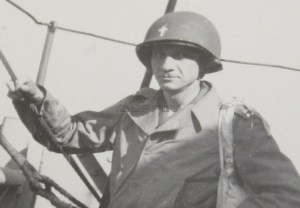
Battle Chaplain (WW2)

This article appeared in Yank magazine, 13 April 1945. Titled, Battle Chaplain, it highlights the ministry of Chaplain Yoder P. Leith of the 338th Infantry Regiment, 85th Division, typical of a chaplain in combat in the European Theater of Operations during World War Two:

He goes up under fire without arms, listens to the TS gripes of his GIs and writes home to their families when they fall.

By Cpl. George Barrett, YANK Staff Correspondent

WITH THE FIFTH ARMY– “I was the traditional clergyman before I came into the Army,” the chaplain said. “Guess I had the idea that being in the clergy I was favored by the Almighty-privileged, in a way. But my first experience under shellfire was with screaming meemies, and when the Jerries opened up with a barrage against my dugout I remember saying ‘Oh, God, wait a minute. Let’s talk this over.’ “

Read the rest of the article here…

.

.

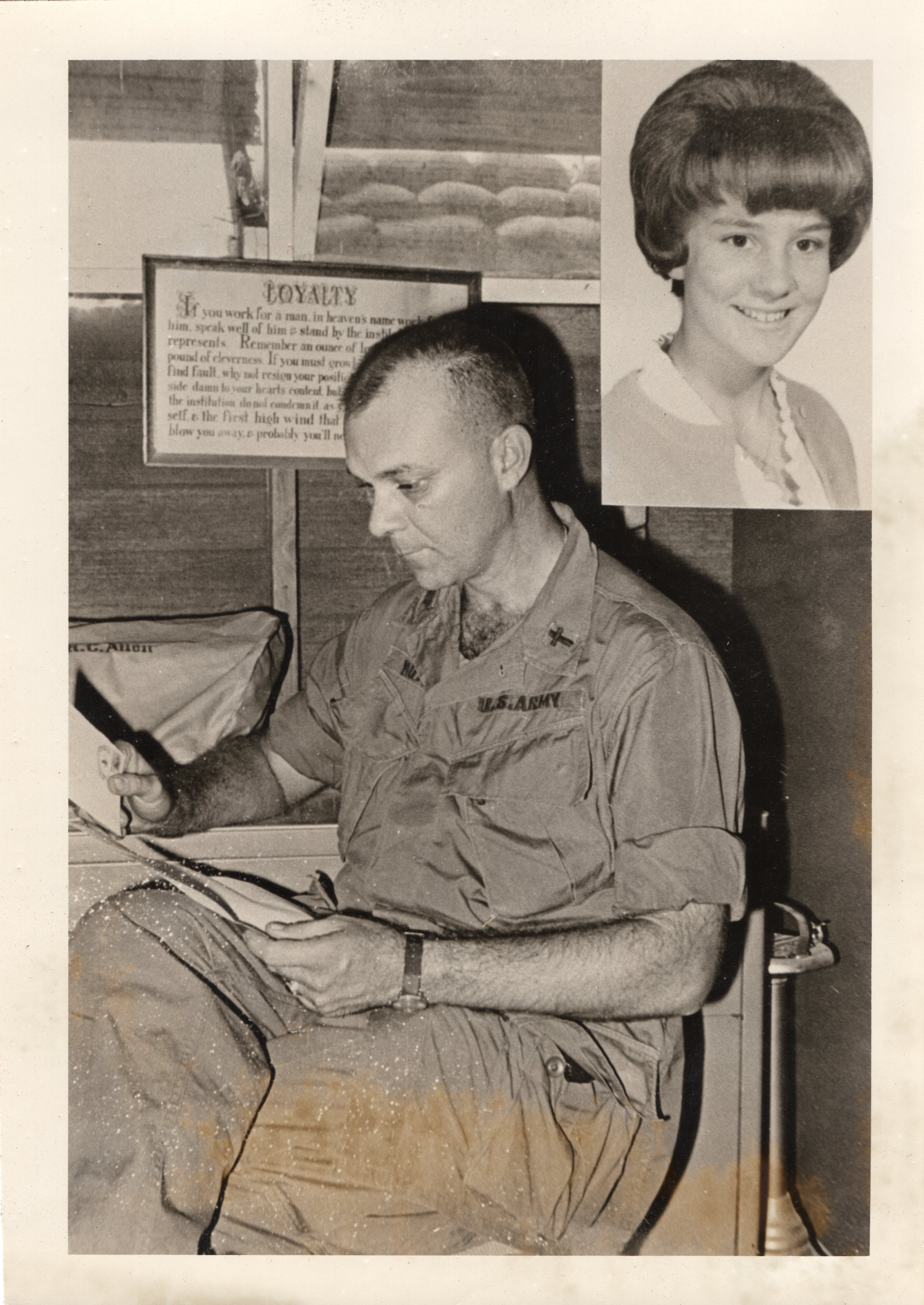
Army Chaplain, His Daughter, A Letter

Chaplain (LTC) Robert C. Young

An interesting essay written in 1967 by the 16-year-old daughter of an Army Chaplain deployed to Vietnam. It gives insight into the possible roles available to women in that era. From the 1967 News Release: 

QUI NHON, RVN—U. S. Army Chaplain (Lieutenant Colonel) Robert C. Young (wife, Betty L., … Stockton, Calif.), serving with Headquarters and Headquarters Company, 58th Field Depot, received a letter from his 16 year-old daughter, Lynn, a Stagg High School junior in Stockton, Calif., who included a civics class paper that revealed her thoughts on the Vietnam crisis.

Titled “The American Woman’s Role in the Vietnam War,” the article gave Chaplain Young pause for thought.

“I was very surprised that any teenage American student, even my daughter, would be so moved by present world troubles to think at length about them,” reflects the 38 year-old chaplain.

“I am very proud to know some of America’s youth are thinking about their relationship to the world, and wish to put their thoughts into meaningful action,” continues the World War II veteran.

To express her thoughts and bare her emotions, Lynn wrote the following article:

Follow this link to read the article . . .

.

.

In the Foxhole (a Soldier’s Poem)

In the FoxholeDeploying into combat, Soldiers sometimes discover that the dangers of war and the possibility of death cause them to examine their spiritual life and they may choose to re-engage the faith of their childhood or explore religion for the first time. Evidence can be found in nearly every war of Soldiers finding or rediscovering God as a way of coping with the dangers of combat, ensuring their eternal destiny or enjoying abundant life and internal peace in the midst of a world where political peace cannot be found. “A prisoner-of-war came into possession of the following poem written in Normandy by an unknown soldier. The P.O.W. sent it home to England” and it subsequently was published by a Canadian hospital ship named Letitia in 1945:

.

In the Foxhole

Christ, I thought I knew all the answers

Until madness started this war;

I never gave You a second thought,

Nor even talked to You before.

The age-old story of Bethlehem,

And the drama of Calvary,

Were nothing more than mere fairy-tales–

Yes, Lord, mere fairy-tales to me.


In the FoxholeBut to-night, my helmet is heavy,

And so is the pack on my back;

Barbed wire has left me two torn hands,

And my feet leave a bloody track.

My shoulders sag ‘neath this heavy gun,

And my body is weary with pain,

And my whole tortured being cries out

For rest and release, but in vain.


For the first time in my life I know

Your head hurt from a thorny crown,

And your tired bleeding Shoulders ached

When that heavy Cross weighed You down.

Those nails cut into Your Hands and Feet,

Every inch of Your Flesh was torn,

And Your bruised Body was weary;

My God, once You too were care-worn!


But You didn’t quit–You carried on

Until the grim battle was through;

And now I know You did it for me–

So I’ll go on fighting for You.

I want You to know I am sorry,

It was my sins put You to death,

And I’ll keep on saying I’m sorry

Until I draw my last breath.


Christ, I never knew war could be the means of saving my soul;

How little I thought that I would find You

In this muddy foxhole.

.


In the Foxhole

In the Foxhole

.

.

I Cry

The following post may be on the fringe of the mission of this site, but I think that since it addresses what so many chaplains do (and feel) many will relate to it. It comes from a Christian chaplain’s perspective so may be most identifiable to those of the Christian faith, but many of the feelings identified are shared with other faiths as well.

.

I Cry

At the risk of being perceived as less-than-masculine or even a wimp, I have a confession to make: I cry.

That’s right, I admit it, I cry.

Gold Star bannerSure, I cry at times when you would expect me to, like when a family member dies or when the Holy Spirit moves in a worship service. But I also cry at times when you may not expect (or even notice), like facing the flag while the National Anthem is being played or during war movies when Soldiers are getting shot and killed.

I cry when I visit veteran’s cemeteries and when I see a flag flying at half-staff.

I cry when I see a notification officer and chaplain getting into a government vehicle, aware of where they are going; and I cry when I see a gold star pennant hanging in the window of a home.

I cry when I see battle-weary Soldiers returning from war, and Soldiers returning with wounds seen and unseen.

graveside flag presentationI cry when I see an NCO, down on one knee, presenting the flag from a Service Member’s casket to the widow of that Service Member.

I cry when I see families saying goodbye to their Soldiers when they deploy and I cry when I see Soldiers greeted with open arms when they return.

I cry when I see monuments to the victors and to the fallen.

I cry when I hear about a veteran robbed at gunpoint or denied service and I cry when I read in the news about a homeless vet who died of exposure on a cold night.

I cry when I see new recruits, volunteers to serve and –if need be- die for their country.

I cry when I see units preparing for a mission, realizing that some of them may not come back alive.

Why do I cry for these things? Because I am an American. I am a patriot. I am a Christian.

Don’t think that the State has become my religion or that the emotions that well up inside of me are a substitute for my relationship with God. Don’t accuse me of “Americanizing” my Christianity and fusing my patriotism with my faith. That is not what I am doing.

American and Christian flags flyingI am a Christian first, with my primary allegiance to God and his Kingdom. Any other allegiances or commitments are second to my commitment to my Creator and Savior. However, even though secondary, I have still pledged my allegiance to my country, and I confess that this allegiance is born from my allegiance to God.

Many people reading this will not understand. Some will think I’m ignorant of what God really thinks. Others will think I’m ignoring the “clear” teaching of Scripture.

But some of you will understand. Some of you have been where I have been.

It is this secondary allegiance, to my country, that has taken me to places where most people do not (or will not) go, places where it seems evil is unstoppable and life is disposable. It is this allegiance to my country that has taken me to the brink of eternity, where the warning signals blare through the speakers providing just seconds before hearing the explosions as they land closer and closer to our position, wondering if they’ll eventually hit their target, while seeing the fear in the eyes of hardened Soldiers.

It is my allegiance to my God and my country that compels me to leave my family to minister to those Soldiers –who are also leaving their families- who go into harm’s way to defend our freedom and the freedom of people they’ve never even met.

Because I have gone; because I have left home, family and friends; because I have seen death and faced the possibility of my own death; because I have returned to the welcomes, knowing others haven’t returned; because I have gone to homes as they’ve been told their loved one has died; I cry.

Maybe you cry too.

.

.

.

.

.

Photo credits:

Gold Star banner in window from Nebraska.org

Kneeling Marine presenting flag from Wasilla, Alaska, by300

American & Christian flags flying from The Cloud Animal

.

.

Originally posted at Here I Sit, 24 January 2016.

.

.

The Chapel of St. Mark at Fort Marion

Castillo De San MarcosFort Marion, now a U.S. National Park site, is the oldest existing masonry fortress in the United States. It sits at the harbor entrance at St. Augustine in Florida. The Chapel of St. Mark, which was part of the original fort built by the Spanish, is an excellent representation of Spanish-Catholic commitment to providing a worship space for their garrisoned soldiers.

The Spanish arrived at the present site of Fort Marion in August if 1565 and established the colony of San Agustín in September. Having barely survived attacks from the French and British with their hastily-built forts, on 2 October 1672, the Spanish broke ground on what would become Castillo de San Marcos but it would take 84 years to complete.

In 1740, enough of the fort was completed to offer safety to the besieged garrison and citizens of San Agustín when James Edward Ogelthorpe, from the British colony of Georgia, attempted to conquer it. The fort proved to be impregnable as canon fire from Ogelthorpe’s guns did little damage. During the 27-day siege, “the garrison chapel was the scene of daily Masses, and occasionally marriages and christenings…”1

To continue reading this article click here

.

.

.